Legends from our own lunchtimes

Monday, March 30, 2020

When nature fails us.
Monday 30 March - Australia - 4163 cases - 163 per million population


When we collected the worn rocks that would become counterweights for our clothes line, we were delighted to have a souvenir from "our" foreshore, just a few hundred metres from" home.   Each day we'd carry one or two home, until we had a neatly graded collection carefully matched in ascending order of weight and size.

They'd been rumbled into shape by the actions of the waves over centuries we figured, or quite possibly somewhat longer. As a bonus the sandstone toned perfectly with the colour of the nasty eighties brick of our house.  

Sandstone...

Perhaps the very name should have sounded alarms in our heads, but it didn't.   It turns out that our sandstone was not very ancient at all as these things go, and was actually comprised of a lot more sand and a lot less stone than is required if one is to have a stone hanging in the rain for any period of time,.   It wasn't too long at all before cracks began to appear in our plan, and in our stones, some of which started to dissolve before our eyes.  Eventually a couple of them disappeared entirely leaving saggy lines, and that will never do.

Perhaps the only thing I dislike in life more than a saggy line, is throwing away a piece of timber, no matter how improbable it might be that a use will be found for it in the future.

Therefore it was with great joy that I discovered some short offcuts of treated fence post in my stash, which I was pretty sure contained a water-worn stone shape within their scruffy exterior and I set to work to find that inner rock.

Perhaps Michelangelo might not approve, but I reckon they'd pass for a Henry Moore on a dark night.

SHARE:

Sunday, March 29, 2020

Solastalgia.
Sunday 29 March - Australia - 3969 cases - 156 per million population


It's odd.   The world is in the same boat and there is undoubtedly a tide of concern for one's fellow man swelling from beneath a turbulent surface.   There are certainly those who continue to row in the opposite direction, to be unhelpful, criticise and disobey because they can, but the most concerning is a growing feeling of displacement, dissatisfaction, or even anger which is also becoming evident, even among those for whom this is out of character.

We are not exempt in our house either, despite our comfort and even happiness with our situation, our angst is not directed at each other but usually rises against an inanimate object such as a television or computer screen, as each continues to pour the world's bile into our house. In our online worlds, little niggles that would normally go unnoticed between friends are turning into running battles.    As Professor Julius Sumner Miller once would ask: "Why is this so?"

Ten years ago, when faced with significant uncertainty (our house was in the process of being resumed), we felt similar emotions.  We weren't unhappy at all, yet there was something happening in our brains which left us less than content.   It had a name as it turned out, and when we discovered that our irrational emotions weren't irrational after all, it was (mostly) easy to redirect them in a constructive way.  

Let's go back in time to see what we discovered:

FRIDAY, JANUARY 08, 2010

The pond is alive at the moment, another lotus flower will be at its glorious peak today.   Their subtlety is an extraordinary contrast to the vivid blues and yellows of the water lilies on the surface, and our little native bees are going gangbusters flitting between them all. 

I must buy the timber to build a new hive today, ours is now long overdue for a split.

As I sit and watch it all a cloud descends.   It's not black or dark or the sort of cloud that makes one perpetually sad or melancholy, but it is none the less a cloud with the merest hint of those ingredients, a whiff of sadness round its edges perhaps.

While we were wondering about all that, and what picture to post for today, Sue phoned and said "solastalgia" was what we were feeling, and our world of hitherto inexplicable emotions suddenly had an explanation;

"It's the homesickness you feel when you're still at home."
… the distress caused by the lived experience of the transformation of one’s home and sense of belonging and is experienced through the feeling of desolation about its change. [snip] 
The diagnosis of solastalgia is based on the recognition of the distress within an individual or a community about the loss of ‘endemic sense of place’ and the loss of a sense of control of its destiny. 
In essence, solastalgia is the sadness caused by environmental change.  
The concept was created by Glenn Albrecht, a professor at the School of Environmental and Life Sciences at the University of Newcastle, after he noticed the depression amongst rural farmers in drought-stricken lands. The drought had caused increased workloads, debt, and fear about future security — and, interestingly, the small changes in their own front yards formed powerful triggers and metaphors for their despair. Albrecht’s studies showed that farmer women would be enormously more upset over the loss of their gardens than their mortgage or income. (“Losing a garden is often quite dramatic,” as a colleague noted. “It’s often the only thing that’s between them and a vast landscape of dust.”)
That's exactly it!  "The loss of a sense of control over its destiny".


It has a name, it's definitely how we feel, but I still don't understand how we have allowed ourselves to succumb to such an illogical malady. "Despair" is not how we feel admittedly, far from that, but we are acutely aware that we are seeing the last season of our frangipani blooms, and that the already vacant houses in our street and the next are starting to show the first signs of unkemptness as our community crumbles before our eyes.

Perhaps when someone actually makes a decision, removing our uncertainty, these feelings will pass.

2020 Footnote: They certainly did, as indeed will the ones that we are currently feeling.

SHARE:

Saturday, March 28, 2020

Gold, Frankincense and Anti-Bacterial Wipes.
Saturday 28 March - Australia 3573 cases - 140 per million population


Some of our kids and their husbands are like many others, employed in industries deemed to be essential or support services.  This is a bitter-sweet state of affairs, as their employment appears to be secure for as long as the current crisis endures, but at the same time they mix daily with a wide variety of people, greatly increasing their odds of actually coming into contact with someone who is carrying the invisible enemy.

As it happened a pair of them had to be in our neighbourhood today, so we all conferred as to what was the best way of seeing them without putting ourselves and our few weeks of isolation at risk.   We settled on a quick lunch out of doors with a very conservative several metres between us, trying to cram weeks of conversation into an hour or so (despite being in almost daily telephone contact), followed by an emotionally awkward departure, devoid of hugs or kisses, and an even more awkward fully gloved disposal of all they had touched.  

We'd had a wonderful time of course, but the strangeness of the times perhaps should be measured by the gifts they bore.   Flowers are always a nice touch, especially just a few days after a birthday when they add icing to the metaphoric cake, but the most precious gift of all, certainly the most appreciated:  a packet of anti bacterial wipes.
SHARE:

Friday, March 27, 2020

What a wonderful world.
Friday 27 March - 3050 cases - 120 per million population


For decades, based on the results of rigorous testing by our favourite consumer organisation we've washed at a low temperature and using around half the recommended amount of detergent.  Our clothes have always come out of that process smelling fresh and clean and snowy white, or at least that's the case for one of us, the other's still have random paint spots, coffee stains and blobs of grease which he may have overlooked prior to trusting the machine to do its thing, but mostly people don't notice.  Or if they do they don't mention it at any rate.

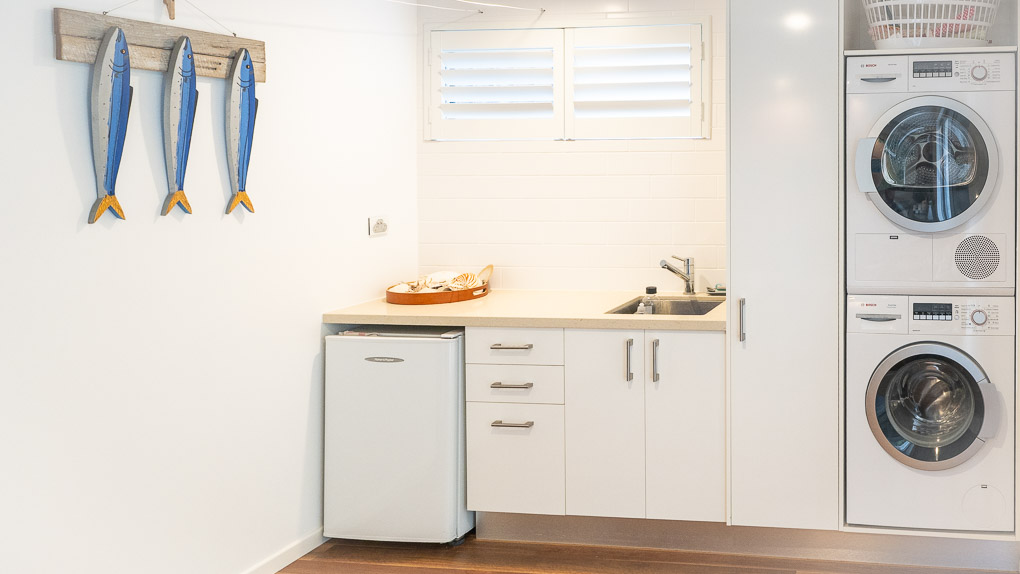
This morning one couldn't help but notice that the washing machine was exuding a less than savoury assault on the olfactory department.  Such was the strength of the pong that we started to wonder if one of our wooden fish had died.  Consoled only a little in the knowledge that a loss of smell is a symptom of Covid 19 infection and clearly we aren't infected, it was time to read the instruction book for the five year old machine.     

Oh. Under the heading "Why does my machine smell?" were these words: "Washing on low temperatures for a prolonged period and/or with less than the recommended amount of detergent is likely to encourage bacterial growth in the machine."   Well, well, well. 

Having failed to persuade the company website to take our money for the prescribed cleaning solution, a quick phone call was in order.   I cannot be sure why I was surprised to phone the Australian service number of a German company and find myself talking to a very helpful person working from their home in the UK, but there they were, accessing Australian warehouse records and arranging despatch, at the same time talking us through a couple of other things we could do to fix the problem.   What a wonderful world. 

With the machine now devoid of stink, perhaps it's time to begin the documentation of the last eight years of renovation work.   Some description of that later, for now the laundry (or utility room now), after and before.


SHARE:

Thursday, March 26, 2020

Signs that we are nearing the end of times.
Thursday 26 March - 2,676 cases - 105per million population


We've known each other for half a century, and in all that time she's never consumed anything sweeter for breakfast than the half-spoon of sugar that accompanies her first cup of tea.  I've actually seen her shudder as I poured maple syrup on my breakfast pancakes (a rare treat) and in fairness I've actually seen a waiter shudder too when she put salt on her French toast, after asking them to hold the sugar coating.

Therefore when she suggested that we might like to try out our brand-new bowl-waffle gadget (and theres a story in itself) for her special breakfast, even though one of us was sore tempted to go the banana, nutella and ice cream route, he moderated his desire, and concocted a mix of fresh fruit, yoghurt and crushed nuts with a drizzle of honey which oddly enough given the habits of her lifetime, seemed to be  entirely to her satisfaction.

Baby steps.
SHARE:

Wednesday, March 25, 2020

Crisis averted, not narrowly.
Wednesday 25 March - 2,317 cases - 91per million population


It had the makings of a difficult day.

Barely after breakfast or perhaps before, one can't be sure as time travels so quickly in times of crisis, one of us walked into the room barely able to disguise her trembling hands, carrying two pieces of plastic which until a few moments before had been disguised as the shiny "metal" handle on the lid to her little kettle.   Life without her tea would be completely intolerable for us both, so with much haste and still clad in his night attire, or at least half of it, the other of us raced into his shed, searching for the box marked "things that might come in handy to use as a teapot handle".

Because his shed may be slightly more organised than others he's seen, almost no time at all transpired before the teapot was back in action, biding its time until he musters the energy to make something closer to the original, or until this one wears out, whichever comes first.  In any case, no cups of tea were missed and a stray cupboard handle that has lived in hope for decades has now found a purpose to its existence, and we all basked for a time in the rosy glow that fixing something creates.

One suspects that as the dust settles from the current world crisis, financial pressures may well force a return to a world where things were repaired rather than discarded.  Perhaps there is good to come from this after all!
SHARE:

Surely you jest!
Tuesday 24 March - 1,887 cases - 74 per million population


The world is full of experts, that is clear, and the amazing thing is that they've achieved that status not by study, but by reading "the letters to the editor" or watching morning television.   Nothing the government is doing seems to meet their approval, despite the strong possibility that the government is undoubtedly doing its best to balance the interests of the country, taking on board the advice from so many differing specialities, perhaps even talking to people with years of actual study and experience.

In trying to balance the health management risks against the economic and emotional well being of the country as a whole, not everyone is going to be pleased with the outcome.   Those whose income is not at risk (or, understandably those whose lives are) will always want the most radical solution and beggar the rest of them.  In two days action has been taken that will result in more than a million lost jobs.  It might be time for the self-taught experts to moderate their stance a little, and perhaps direct their energy in some more positive manner.  (Like writing angry blog posts such as this!)

Having said that, one has to wonder at the quality of the expertise of those advising our state government.  Three days from an election which will see every person over eighteen years of age turn out at a time when even weddings are limited to having five people present and we are still receiving reminders that VOTING IS COMPULSORY.

I wonder if, six days from now, when a quarter of the State starts to exhibit signs of Covid 19 infection contracted at the polling booths, our Premier will jump up and down on her dias shouting "April Fools"!

SHARE:
Blogger Template Created by pipdig